Friday, April 17, 2009

Susan Van Metre • Interview Adventures • 4


Susan Van Metre was sitting in the stacks of the Mount Holyoke College library one evening, struggling to finish a paper for her “Women and the American West” class (which wasn’t as much fun as it sounds), when she noticed a book called The Railway Children by E. Nesbit on a nearby shelf. E. Nesbit is mentioned in one of Susan’s favorite books of all time, Half Magic by Edward Eager, but it had somehow never occurred to her before that E. Nesbit was a real person. Of course, she spent the rest of the night devouring the works of Ms. Nesbit to the neglect of her paper. This was just one sign of the children’s book addiction that led her to the Radcliffe Publishing Course and then to a decade at Dutton Children’s Books. She came to Abrams in 2002 to help start Amulet Books, a middle grade and young adult imprint now in its fourth year. She is the editorial director of Amulet.
Susan has had the pleasure and honor of working with such talented writers as Lauren Myracle (whom she pulled out of slush), William Sleator, Eva Ibbotson, Aidan Chambers, Janet S. Anderson, Arthur Dorros, and many others. Lately, Susan is focused on acquiring novels for Amulet, though she likes to work on the occasional picture book for the Abrams Books for Young Readers imprint. Her tastes are broad. She loves contemporary, historical fiction, mystery, fantasy, sci fi, romance, and more. She has a special weakness for family and ensemble stories (see E. Nesbit and Edward Eager), and thinks Jaclyn Moriarty and Polly Horvath don’t write quickly enough.


CW: What did you study in college? What school did you attend?

SVM: I planned to study psychology as that was the subject taught by my favorite high school teacher, Ms. Hannah, but then I just couldn’t stop taking English literature classes. I was an addict! By the time I was a senior at Mount Holyoke (after a stint at Oxford), I had so many lit. credits they MADE me take other courses so I’d graduate a well-rounded liberal arts student.

CW: What are some of your all-time favorite books?

SVM: My most beloved books are The Chronicles of Narnia by C.S. Lewis. I read them on a family trip to England and checked the wardrobes in every B&B from London to York for a passage to Narnia. Even my deep admiration for the books of Philip Pullman, an avowed detester of Lewis, cannot shake my devotion. Lewis is a great appreciator, particularly of food. As I am always hungry, I feel we’re kindred spirits. I realize I publish many books based on their great descriptions of food. Perhaps I should have been a cookbook editor.

CW: What is editing? Can you talk me through the editing of books and what your role is from beginning to completion?

SVM: Editing is a compulsion! I think of editing as project management. Though shaping a text is my favorite part of the job, there is so much, much more to being an editor. You are there at every stage, a cheerleader, a financier, a negotiator, a shrink, a hand-holder, a midwife, a bedeviler, a rallier, a general! It all begins with falling in love with a manuscript, seeing the potential in it, and then engaging in the process of convincing others to love it, too. First in-house as you work with the author to get it into its best possible shape, and then in the wider world when you launch it as the book it was meant to be.

CW: When did you realize you wanted to work in publishing?

SVM: The day it occurred to me that someone made the books I loved so much. This seems obvious, of course, but for most of my young reading life I didn’t think far beyond the author’s role. I had a prized copy of Jane Eyre, illustrated by Fritz Eichenberg. (See the cover below.) It was an ostentatious bit of book-making, which I loved at the age (about twelve, I think), because it made me feel I owned something as commercially valuable to the world as it was spiritually and intellectually valuable to me. The edition, published by Random House, probably isn’t worth much, but I was convinced then that it was, or would be if I held onto it long enough! Anyway, I think it was the “high class” look of that edition that gave me my first inkling that someone aside from the author was involved in giving a book its physical form. And, I thought, I could help with that!


CW: How did you break into the industry?

SVM: The Radcliffe Publishing Course, now at Columbia. I met three very talented children’s publishing people there: Karen Lotz, Christopher Franceschelli, and Stephen Roxburgh. They seemed genuinely enthusiastic about their jobs, unlike the jaded folks from the adult book world who also taught the course. From what I gleaned from these three, there was still room in children’s books to do something you really cared about, to publish books just because they were good. That appealed to me. And it helped that Christopher and Karen offered me a job! As editorial assistant at Dutton.


CW: What appeals to you about working in this field?

SVM: I like reading for a living! I like working on something different every day. I like working with so many smart, creative, engaged people. Just go to the DMV; you’ll find yourself scurrying back to the cocoon of literacy that is publishing.

CW: Amulet is celebrating its 5th Anniversary, how did Amulet Books come to be and where do you see the imprint on its 10th Anniversary?

Howard Reeves, the Abrams BYR publisher, phoned me saying he had an editorial position open. I’d been at Dutton for twelve years and though I loved the list and the people, I was ready for something different. But I knew Abrams as an art book publisher. And I knew they didn’t publish novels, which are my favorite things to edit. But Howard told me Abrams was looking to grow and that fiction was a possible area to expand into. I came on board, got the green light to sign up some novels, and Amulet was born!

CW: What makes an Amulet Book an Amulet Book?

SVM: Pretty early on we knew we wanted a literary list, but also one with strong appeal for kids. And we knew that to stand out, we had to take risks, both in format and content. I hope we’ll continue to do that in our second five years.


CW: When working on a book--either a picture book or novel--what is the process of selecting an illustrator?

SVM: Oh, I am always full of ideas, which you bat down. Kidding! I often have a very clear picture of the tone and style that will suit the text, but I rely on the expertise of the art department in helping me identify just the right illustrator.


CW:
Describe a healthy editor and art director relationship?


SVM: One in which argument is welcome. I think some of the strongest books come out of lengthy, lengthy discussion.


CW: The phrase "original voice" is thrown around a lot when people talk about looking for manucripts or even illustrators. What does this phrase mean to you?

SVM: So much is written in a bland, colorless tone. A really confident writer gives personality to the narrative voice. Think of the chutzpah required to interrupt the narrative as Daniel Handler does in the Lemony Snicket books. Or to alternate between folksy storytelling and introspective preteen angst as Louis Sachar does in Holes.


CW: Can you identify some current trends in children's publishing? Are these trends good for books?

SVM: I think there have been some brave and interesting attempts to extend the experience of the physical book to the internet with games and contests and videos. We all know that kids are online, in ever greater numbers, and we want to figure out how to stake a claim to some of that surfing time. But I’m not sure anyone has hit on the perfect combination of book and web experience. This trend doesn’t seem to be hurting the book, or helping it that much either, beyond an obvious exception or two.


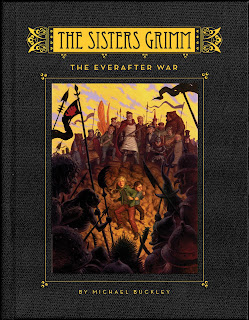
CW: You have had a lot of successful series come out of a relatively young imprint: The Internet Girls by Lauren Myracle, The Sisters Grimm by Michael Buckley, Diary of a Wimpy Kid by Jeff Kinney, and The Chronicles of Faerie by OR Melling. What is your secret to success?

SVM: Thanks! Honestly, good timing and a lot of luck. I publish books I like. That’s what any editor or publisher would do.


CW:What is the hardest and most rewarding part of being an Associate Publisher?

The hardest part is all the meetings! The most rewarding part is shaping the future of a list I helped start.


CW: Do you have any books coming up that you are excited about?

SVM: I am excited about all of them! We have an amazing Fall ‘09 list. Truly stellar. And there are two quirky novels on the Spring ‘10 list that I am curious about. I wonder how they will be received, they are so unusual. One is The Strange Case of the Origami Yoda by Tom Angleberger. It’s a mystery about an awkward kid who won’t speak to his classmates directly, only through a finger puppet of Yoda. And the thing is, this kid can’t do anything right but his Yoda puppet gives great advice to the other kids in the class. They can’t figure out; some of them think the puppet might be “real.” The mystery is their investigation of the puppet’s “powers.” The other quirky title is Attack of the Fluffy Bunnies by Andrea Beaty. It’s sort of like The Hitchhiker’s Guide to the Galaxy, but with giant alien rabbits.

CW: I need a funny question to go out on. Any ideas?

SVM: Well, I can’t think of any better words to end with than “giant alien rabbits.”

Thursday, April 09, 2009

Graphic Novel list

Next week I will be speaking at the SCBWI New England conference in New Hampshire on the art of Graphic Novels particularly focusing on the kids side of the medium. I among others were asked for a list of our favorite 'Graphic novels'. Here is my list

Sunday's with Walt and Skeezix - Frank King
Little Nemo in Slumberland, by Winsor McCay
Blankets - by Craig Thompson
Cheat - Christine Norrie
Spiral Bound - Aaron Renier
All Star Superman - by Grant Morrison, illustrated by Frank Quitely
Exit Wounds - Written by Ruth Modan
Three Shadows - by Cyril Pedrosa
Diary of A Wimpy Kid - Jeff Kinney
Bone - Jeff Smith
Night Fisher - R. Kikuo Johnson
Shortcomings - Adrian Tomine
M - Jon J Muth
The Three Paradoxes - Paul Hornscheneir
The Upturned Stone - Scott Hampton
Watchmen - Alan Moore

I am sure there are more but these are just some that came to mind

Wednesday, April 08, 2009

Amulet Fall 2009 Preview

AMULET BOOKS FALL 2009
A sneak peak at our young adult and middle grade novels covers


By Michael Buckley
A secret spy ring of nerdy elementary school misfits
Michael Buckley is at his comic best in this madcap new series sure to appeal to kids looking for a quick, exciting read.
Combining all the excitement of international espionage and all the awkwardness of elementary school, NERDS, featuring a group of unpopular students who run a spy network from inside their school, hits the mark. With the help of cutting-edge science, their nerdy qualities are enhanced and transformed into incredible abilities! They battle the Hyena, a former junior beauty pageant contestant turned assassin, and an array of James Bond–style villains, each with an evil plan more diabolical and more ridiculous than the last.

Four friends navigate the ups and downs of fifth grade.
What do Katie-Rose, Yasaman, Milla, and Violet all have in common? Other than being named after flowers, practically nothing. Katie-Rose is a film director in training. Yasaman is a computer whiz. Milla is third in command of the A list. And Violet is the new girl in school. They’re fab girls, all of them, but they sure aren’t friends. And if evil queen bee Medusa—’scuse me, Modessa—has her way, they never will be. But this is the beginning of a new school year, when anything can happen and social worlds can collide . . .
Told in Lauren Myracle’s inventive narrative style—here a fresh mix of instant messages, blog posts, screenplay, and straight narrative—Luv Ya Bunches, the first in a four-book series, is a funny, honest depiction of the shifting alliances and rivalries that shape school days, and of the lasting friendships that blossom from the skirmishes.


Filled with quizzes, lists, advice, and trivia, this interactive book for friends to fill in together extends the fun of the bestselling Internet Girls series!
Readers fell in love with Angela, Maddie, and Zoe, the three great friends who shared their ups and downs in ttyl, ttfn, and l8r, g8r. Now readers get to chronicle their own BFF experiences as they fill out the quizzes, questionnaires, and lists in this fun, interactive companion to the series. Together, friends can figure out which character they most resemble, cast the movie of their lives, and make promises to their adult selves. (“I hereby officially swear I will never ever EVER wear ‘mom jeans,’ so help me God. And if I do, I will have to eat my own shoe.”) Perfect for a car trip or sleepover, this book will provide as many laughs and blush-worthy opportunities for reflection as the series that inspired it.


A bright debut about forming a band, falling in love, and facing the truth
Told in a voice that’s honest, urgent, and hilarious, Struts & Frets will resonate not only with teenage musicians but with anyone who ever sat up all night listening to a favorite album, wondering if they’d ever find their place in the world. Music is in Sammy’s blood. His grandfather was a jazz musician, and Sammy’s indie rock band could be huge one day—if they don’t self-destruct first. Winning the upcoming Battle of the Bands would justify all the band’s compromises and reassure Sammy that his life’s dream could become a reality. But practices are hard to schedule when Sammy’s grandfather is sick and getting worse, his mother is too busy to help either of them, and his best friend may want to be his girlfriend.
When everything in Sammy’s life seems to be headed for major catastrophe, will his music be enough to keep him together?


A riveting, contemporary retelling of the famous Troy myth, set in two rival high schools
Homer’s Iliad, the classic tale of love and revenge, is shrewdly retold for teens in Troy High. Narrated by Cassie, a shy outsider who fears that an epic high school rivalry is about to go up in flames, the story follows the Trojans and Spartans as they declare war on the football field. After the beautiful Elena—who used to be the captain of the Spartan cheerleaders—transfers to Troy High and falls madly in love with Cassie’s brother Perry, the Spartans vow that the annual homecoming game will never be forgotten. The Trojans and Spartans pull wicked pranks on each other as homecoming approaches. And the Spartans’ wildcard football star, Ackley, promises to take down the Trojans’ offensive line. But the stakes are raised when Cassie is forced to choose between the boy she loves (a Spartan) and loyalty to her family and school. Troy High will seduce readers with its incendiary cast of mythic proportions.


This new epic explores one of the most beautiful and fearsome animals of them all—the polar bear.
In the ice wilds of the fabled north, the lords of the moving mountains have always been the polar bears. Kings of the wild, the white bears have ruled since the beginning of time, believing that they were hurled to earth from the heavens. There is only one creature they fear—man.
The polar bears are also haunted by a prophecy, that one day the ice will suddenly cry out and die, causing the fish to float and the seals to flee. Then, as a result, one will be born among them—a white cub with one black paw who can hear the very beating of the polar heart. It is he who will lead his kind, and the whole world, to safety.


By Daniel Kirk
The sequel to
Elf Realm: The Low Road
In The High Road, Matt and his sister Becky must work with the elves and Tomtar the troll to save the Cord and the human and elf worlds. After forming an uneasy alliance, Matt, the elf Tuava-Li, and Tomtar set off to find the sick and dying tree at the northern pole, whose roots bind the worlds together through the Cords. The trio must restore the tree to bring well-being to all the realms.
Meanwhile, Becky accompanies Asra to free Becky’s parents, held captive in the elfin kingdom of Helfratheim. To their horror, both groups discover that Brahja-Chi has begun kidnapping human children for a mass sacrifice to appease the goddess. Not only do they have to accomplish the tasks they originally set out to perform, but now they must also stop the fiendish Brahja-Chi and her accomplice, Jardaine.
Daniel Kirk’s trademark illustrations—including maps, character portraits, and other scenes—bring to life the riveting and engaging story.


By Marissa Moss
History, adventure, and mystery combine in this first novel from the author of the bestselling Amelia’s Notebook series.
Filled with intrigue and surprises, The Pharaoh’s Secret includes Marissa Moss’s original illustrations throughout. The novel skillfully weaves history with a personal story full of heartache and family tensions that will entice and enthrall readers.
When Talibah and her younger brother, Adom, accompany their father, an academic, to his homeland of modern Egypt on his research assignment, they become involved in a mystery surrounding an ancient, lost pharaoh—a rare queen ruler. Someone has tried to wipe her from the record, to make it appear as if she never existed! She needs Talibah to help her and her high priest, Senenmut, reclaim their rightful place in history. Exotic locales, mysterious strangers, and a sinister archaeologist round out an adventure that is full of riddles, old tales, and, most surprisingly of all, a link to Talibah’s and Adom’s mother, who died mysteriously.


A captivating adventure and coming-of-age story about brotherhood and friendship
The author-translator team behind the internationally acclaimed Tiger Moon reunites for this lush, exotic tale of fantasy and adventure—and dragons galore.
In this thrilling modern-day fable, two boys from very different backgrounds are thrown together by magic, mayhem, and a common foe. Jumar, an invisible prince, wants to free his native Nepal from invaders. Christopher, a shy German boy, wants to find his kidnapped brother. Together they embark on a journey through the wilderness of Nepal—a journey that proves to be a dangerous rite of passage. Fighting the beautiful but deadly dragons that beset the country, the two boys learn that in order to change the world, they must first change themselves.


By Fiona Robinson
A funny, clever detective story for young graphic novel fans!
Fast-paced, full-color, and divided into short, easy-to-read chapters, this is a wonderful graphic novel for younger readers, offering a seamless transition between picture books and novels.
On the 3:23 Express to Whiska City, five unlikely friends meet and decide to form a detective agency. There is Jenny the wise donkey, Roger the gourmet dung beetle, Priscilla the theatrical penguin, Slingshot the hyperactive sloth, and Bluebell the shy but brave rat. With little training but a lot of pluck, they set up shop in Whiska City and soon tackle their first mystery: a rash of disappearances linked to a pink poodle’s beauty salon.


Introducing two more classics in the Manga Shakespeare series!
Combining manga and the timeless texts of Shakespeare’s plays, this series translates some of the greatest works of literature into a new format. In King Lear, the aging king—here a Native American—must decide how to split his kingdom among his daughters. When he scorns his one dutiful daughter and trusts the two selfish ones, he pays a steep price. In Much Ado About Nothing, Beatrice and Benedick trade insults and fall in love in the sunny Italian court of the Duke—but the Duke’s brother has devious plans to ruin the happy mood. Manga readers can now enjoy the wit and drama of these plays firsthand.

ALSO COMING IN OCTOBER 2009

Monday, March 30, 2009

ABRAMS new logo and website


After months of development and many font choices later ( AT Burin, Sackers, Sans, Neutra and Garamond to name a few) from fellow Art Directors Galen, Michelle and myself, I am pleased to announce the launch of our new and improved ABRAMS logo and website: www.abramsbooks.com

ABRAMS

Founded by Harry N. Abrams in 1949, ABRAMS was the first company in the United States to specialize in the creation and distribution of art and illustrated books. Now a subsidiary of La Martinière Groupe, the company publishes visually stunning illustrated books in the areas of art, photography, cooking, interior and garden design, craft, architecture, entertainment, fashion, sports, pop culture, as well as children’s books and general interest titles. The company’s imprints include Abrams, Abrams ComicArts, Abrams Image, Abrams Books for Young Readers, Amulet Books, Stewart, Tabori & Chang, and STC Craft/A Melanie Falick Book.


Our goal was to modernize, simplify and still remain faithful to our history.

Here is the final and new ABRAMS logo I worked up.

The display font is Gotham
The logo tagline is set in AT Sackers

In addition to a refreshed and modern design, our website has many new features including an improved search engine, navigation by subject and enhanced product pages that include image galleries, “look inside” previews and social bookmarks. Social bookmarks on each product page will enable viewers to easily share our titles with friends on Facebook.com, Digg.com, Stumbleupon.com, Myspace.com, Delicious.com, and Google.com. This will be a great way for our books to be marketed virtually. The new website also has an area to spotlight featured authors, an events calendar, an integrated newsletter system and the ability to create discounts and coupon codes for marketing and sales campaigns.

CARD DESIGN


I hope you’ll take some time to explore the new site and forward the link to all of your contacts and friends:

Friederike Paetzold designed the look and feel of the new website

Along with our new website we are simultaneously launching a
brand new Facebook fan page for ABRAMS:

If you are Facebook member, click on the “become a fan” link on the left side of the page and please share the page with your friends on Facebook by posting it to your profile page by clicking on the “Share +” button on the left side of the page as well. Let me know if you need any assistance or if you have any questions, comments or suggestions.


Wednesday, March 25, 2009

Abrams books for Young Readers Fall 2009 Preview


Melissa Arnst

THE 2009 NEW YORK BOOK SHOW AWARDS

The 2009 New York Book Show Awards have been announced

Diary of a Wimpy Kid
WINS
First Place Cover for Young Adult Fiction Series

Tuesday, March 17, 2009

CBS EVENING NEWS STORY


Watch CBS Videos Online


I don't think it really hit me until watching this how far our little book has really come. Back to working on book 4.

Wednesday, March 11, 2009

John Hendrix • Interview Adventure Series • 3


CW: What are the origins of John Hendrix?

JH: I grew up in St. Louis, Missouri, which happens to be where I live now. I've also lived for seven years in Lawrence Kansas, and spent 4 years in New York, NY.

CW: What is your educational background?
Wha
t courses or training might
be helpful in beginning a career in illustration?


I studied illustration in my undergraduate experience, and though that is really great training- illustrators have often come into the field from unusual backgrounds. The program I studied in was called "Visual Communication" and that an important distinction. We must remember, as illustrators, that our primary goal is not expression, but communication. That is why learning how to use 2-D design skills like hierarchy, scale-shift, figure/field relationships are really helpful to learn about communication. We have to strive for not just interest but clarity.


CW: You're illustration career is in a way just beginning.
However you seem already very successful.
Is illustration your only means of support or
do
you have a day job as well?

JH: I illustrate about 60 editorial jobs a year, along with a book about every year and a half. On top of that I do teach illustration at Washington University in St. Louis. Teaching is wonderful, despite the hassles of committee work and occasional problem students. I love talking to others about illustration and showing young artists things they have never seen before. What an honor to say to a student "You ever heard of Robert Weaver?" Then watch their eyes bug out when I show them his original Yankee Spring Training Sketchbooks in WashU's Modern Graphic History Library. And I learn nearly as much as they do, because trying to describe your process and methodology requires examination of your own work in new ways. I dont' teach for the money, as many of my students think. I could easily get by freelancing. I really do love getting out of the studio and interacting with these students and the other faculty. It keeps you young!

CW: When I first met you we worked on a project called Castaways. You illustrated the cover art. But at the time you were using a different style. How did you develop your current line art style and why did you let go of your old style?
JH: At the time we did our first project together, I was working in a very tight painting style. It was something I had developed in undergraduate school. When I g ot to graduate school, I began to look around my studio and realized the work I hung up in my space that I admired looked NOTHING like the stuff I made. Slowly I realized that I loved drawing way more than painting. My sketchbooks were key to unlocking the visual voice that is much more true to who I am.

CW: What lessons do you think could be learned by this self realization?

JH: Part of the lesson is that even if you are getting work, it might not be the work you want. That is what happened to me. Ultimately I was selling somethi ng that I thought would make me successful, even though it was a product I couldn't believe in. Now, that realization comes now after years of distance. At the time, it felt crazy to turn down a book jacket illustration (that you gave me right after Castaways) because it was the kind of thing I didn't want to be doing for the next 30 years. I was still in grad school and felt that I had to right the ship while I could and take a chance to make the kinds of images I wanted, not the ones I thought others wanted me to make.

CW: You have done work with Sports Illustrated, Entertainmen t W eekly, Rolling Stone, The New Yorker, Esquire, The New York Times, and Nickelodeon among many others. What drew you to children's book illustration? How did your first book come to be published?

JH: Children's books were the first illustration vehicles that I truly loved. Its the aspect of fantastical storytelling that drew me to visual stories. Of course, my editorial career took off and I love doing those images as well, but my heart has always leaned towards story in sequence. My first book I wrote, John Brown, ended up being my second boo k. As I was looking for a publisher for John Brown, I found several manuscripts that people wanted me to illustrate. Given my civil war interest, the story for "Abe Lincoln Crosses a Creek" was a perfect fit.

CW: What are some of your favorite books for children?

JH: Oh boy. Where to start?

Back in college I loved The Mysteries of Harris Burdi ck, by Chris Van Allsburg. Lizbeth Zwerger's Wizard of Oz is up there for me as well. Recently I've really been an admirer of the zany and visually driven books of Shaun Tan and Adam Rex. The Arrival and Frankensteinmakes a Sandwich . But, I can leave out the haunting and truly visionary Caldecott winner from last year The Invention of Hugo Cabret -Golly, that thing is a masterpiece.


CW: Who are your artistic influences?


JH: I love love love the following artists: Winsor McCay, Barry Blitt, Arthur Rackham, Jack Unruh, Kadir Nelson, NC Wyeth, Edward Hopper, Joseph Cornell, Dean Cornwell, Robert Lawson . . . on and on!


CW: JOHN BROWN is your second children's book a nd the
fi
rst full picture book project we worked together on. Can you describe
your creative process? And how you a
pproached the
challenges of this particular book?

JH: It has been a long time coming as you know, but the process has been very rewarding. For me, all ideas start with visuals. I first fell in love with John Brown as a visual subject. When I started reading about him, I also loved who he was and what he believed in. So, I made a list of all the images I wanted to include in a story about his life, and wrote the book around those ideas. Even though I wrote this book, I would never start with words. I am not a 'writer's writer'... but an artist who uses words to frame and create my own visual content.


CW: You start JOHN BROWN almost five years ago. What has taken
so long for it to become re
alized as a finished book?

JH: Yes, even though the book took five years to go from idea to publication, I wasn't working on it the whole time. I sold it to another house in 2004 and we worke d on it for a year trying to get the manuscript right. It went from being about 2500 words to 6000 and then back to 3000, but they weren't able to resolve some of the more difficult content issues I mentioned. So, it was dropped in 2005. (By the way, they were super nice and it was all very amicable in the end. No one felt worse than they did that it didn't work. But I was still crushed.) It got new life back in 2006 when Abrams took a chance on me. (cue ABBA!) Then another year in edits and sketches and six months in final art. Voila!

Now, the way I first got into selling the idea was pretty silly. I had some drawings in my book of John Brown and I went to a portfolio show where I met an assistan t art director who said "Hey, if you like John Brown, he'd be a great kids book" I laughed and laughed, then realized she wasn't kidding and said "I think you're right." I had worked o n a draft for a few weeks, then the AD called me and said "I'd love to take a look at your JB book idea." At this point, I had nothing really but faked it. "Of course, I'll bring it in next week." So, I crushed the dummy draft in about 10 days and they really loved it. What helped was that I used my design skills to design and layout the entire book as I saw it being realized. It wasn't just floating drawings and handwritten copy. I really packaged the whole thing, using the typefaces I wanted, and the hand drawn text. So, in the end, I think what the belie ved in was my ability to make a book, not so much that John Brown would be good content. But fortunately, it has a happy ending. Thank you ABRAMS!


CW: For almost as long as I have known you, you have
been working on
JOHN BROWN.
Why John Brown? What is it about this
historical figure that captures your attention
?


JH: To me, he is a true civil rights hero. And most people think he is a lunatic. We have this popular image of him as an insane loony who killed people with some flawed notion of his own importance who was punishing innocent civilians because of his religious beliefs. When you really read what he believed and why he was brought to his actions- you see just how unique he was in his own era. A true visionary, and he has been minimized because I think most people are uncomfortable with people who are strongly motivated by religious ideas. So, as a person who shares the faith of John Brown, I feel as though he deserves a more accurate account of his life.

CW: What did you find to be the toughest and most rewarding
aspects of your work on
JOHN BROWN?

JH: The challenges are easy to pick out. Though I really think there is value in talking to children about the nature of human conflict and the nature of evil, showing the events of his life (visually!) to an audience of young people was tough. You don't want to sugar coat his action and create some inadvertent propaganda. But you also need to be sensitive and protect young people from things that would negatively affect their minds. Generally I think that kids are pretty robust thinkers and can handle cognitive dissonance, as long as we present it in a manner that is clear.


CW: One of the struggles I recall was making the story more 'kid friendly' without changing history too much. How did you manage throu gh this idea?


JH: Yes, it is tough to hold these in tension, but neither can be neglected. One point is that you can't avoid the truth. So, in regards to the Harpers ferry attacks and the deaths in Kansas—I think you address it calmly in the text, but in the text only. Let the pictures solve the context and the text answer the specifics. I think its expected that an artist will take a certain amount of liberty in telling a story, but you don't want it to be in the part s that everyone expects you to change in order to make your point. That could really undermine my point of view about his ideas if I throw metaphorical softballs at all the toughest events from his life.

CW: One aspect of your work I love is your use of hand drawn in the design of the page.
What inspires you to work with typography?


JH: I love, love, love, typography. I also studied and completed a degree in Graphic Design in undergrad and I've always been attracted to artist who use graph ic space in their work (Al Parker, Josh Cochran, for example) But, the building blocks of illustration is word and image. Without text, there is no such thing as illustration. So why not have them in the same space and interacting in the same language. Also, as an artist who is writing his own books, I feel like I have to offer something that a writer alone or illustrator alone can't provide. So, the interaction with text inside the frame is a way to create a hybrid language in my work.

CW: What is next for you?

JH: Well, good news. We will be working together on another book centered on the Civil War. called Nurse, Soldier, Spy: The Story of a Civil War Woman by Marissa Moss. A great story about a young girl, Sarah Emma Edmonds who dresses up like a man to fight for the Union. True story!

CW: Sweet. I can't wait!

CW: Have you thought about growing a beard like John Brown? His is quite impressive!

JH: Uh, have you seen the picture of me on my website bio page???


http://johnhendrix.blogspot.com/

http://www.johnhendrix.com/


JOHN HENDRIX
ISBN: 0-8109-3798-7
Hardcover with jacket
US $18.95
Availability: Preorder (available in Summer 2009)


Interview Adventure Series • 4 •
Starring Kelly Murphy illustrator of Hush, Little Dragon coming soon!